


TL;DR:
- Moving heavy appliances requires careful preparation, proper equipment, and clear communication to prevent damage and injury. Using specialized tools like appliance dollies and powered stair climbers, along with thorough planning, ensures a safe and efficient relocation. Avoid common mistakes such as tilting appliances excessively and neglecting transit bolts to protect appliances and maintain safety.
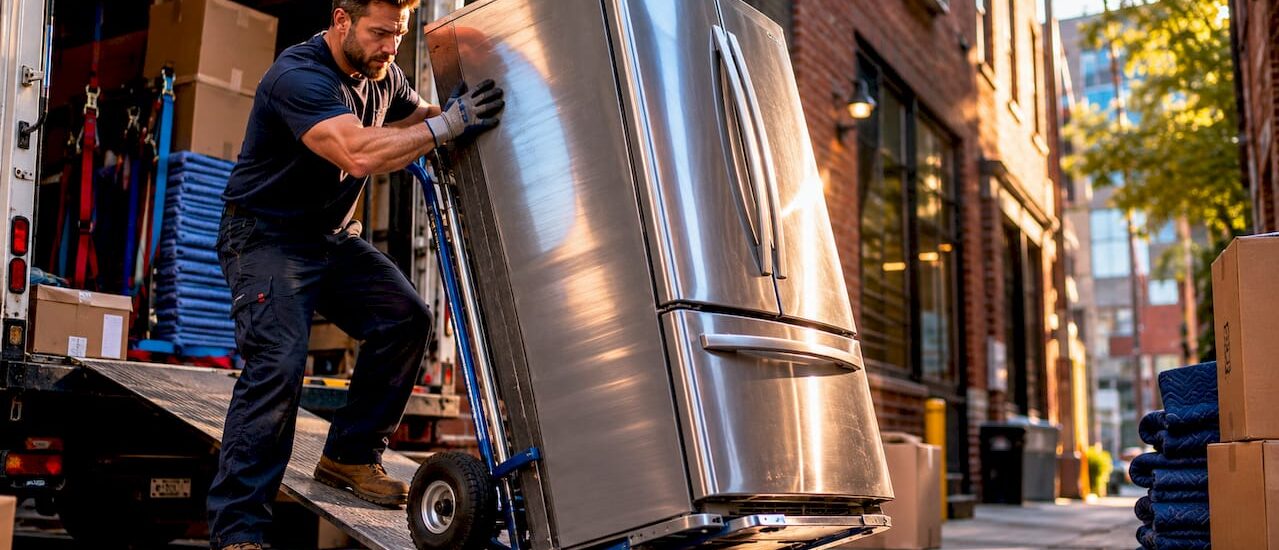
Moving heavy appliances is the process of safely transporting large household or commercial machines like fridges, washing machines, and dryers using specialised equipment and careful preparation. Get it wrong and you risk a damaged compressor, a flooded laundry, or a back injury that sidelines you for weeks. Refrigerators weigh between 300–500 lbs, and washing machines tip the scales at up to 220 lbs. Those numbers demand more than a strong back and a willing mate.
Preparation is the single biggest factor separating a clean move from a costly one. Most damage happens before the dolly even rolls.
Start at least 24–48 hours before moving day. Defrost your fridge completely during this window to prevent water damage to floors and the appliance itself. Washing machines need to be fully drained and dried to stop mould forming inside the drum during transit.
Here is a preparation checklist to work through before anything gets lifted:
Pro Tip: Photograph all hose connections and power cable positions before disconnecting anything. You will thank yourself during reinstallation.
Telling your helpers about the route and any hazards before you start is not optional. A team that knows where the tight corner is will not be surprised by it at the worst possible moment.
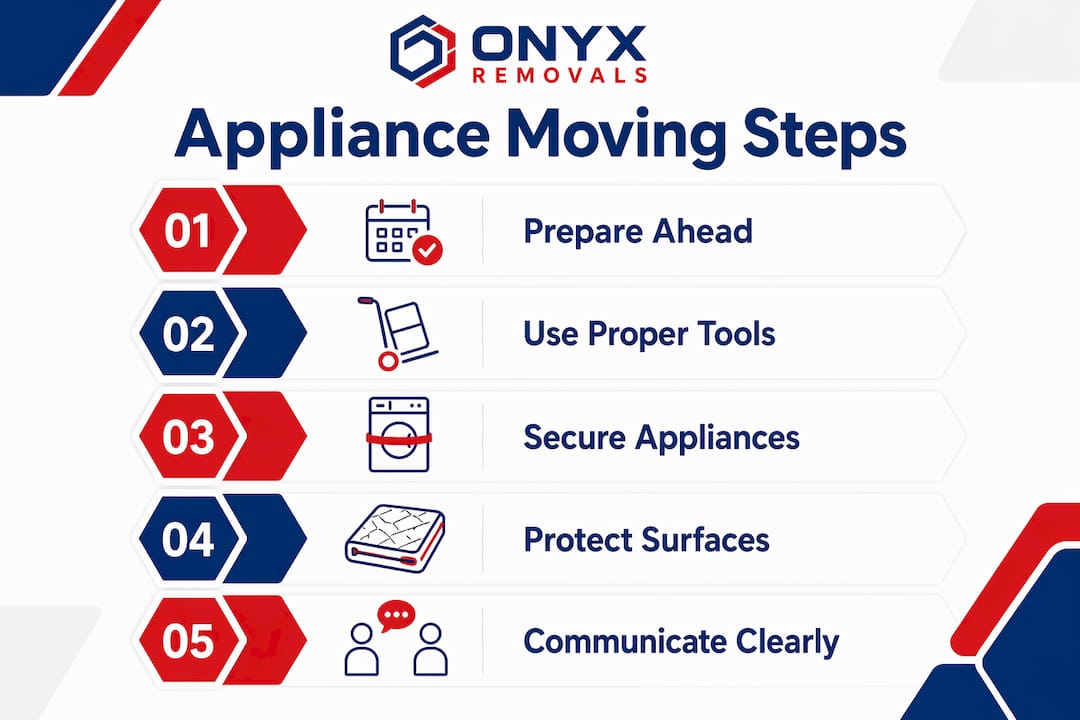
The right equipment does most of the work. Trying to muscle a 200 kg fridge without proper gear is how floors get gouged and people get hurt.
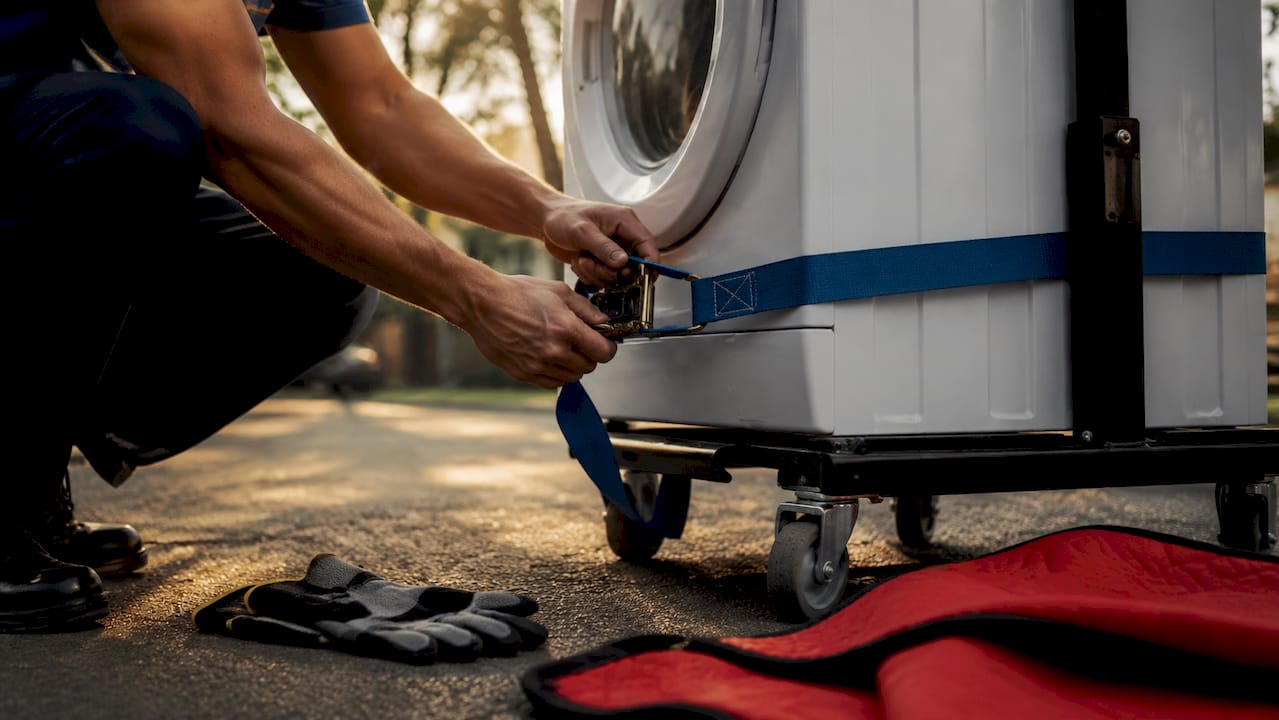
An appliance dolly is the core tool for this job. Standard flat platform dollies work for short, flat distances. Appliance-specific dollies have a tall back frame, integrated straps, and a nose plate designed to slide under the base of a fridge or washing machine. For stairs, powered stair climbers are the industry standard. They handle loads up to 500 lbs and distribute weight across multiple treads simultaneously, which protects both the staircase and the movers. A standard dolly concentrates the full load on one or two treads at a time, which creates real structural risk. You can find detailed guidance on selecting moving equipment for heavy appliances on the Onyx Removals resource hub.
All equipment must carry a verified load rating at least 25% above the appliance weight. A 200 kg washing machine needs gear rated for at least 250 kg. Ratchet straps are non-negotiable for securing appliances to the dolly and inside the vehicle. Cam buckle straps are not sufficient for loads this heavy.
Pro Tip: Buy ratchet straps with a working load limit printed on the label. If the label is missing or faded, replace the strap before the move.
Moving blankets wrap around appliances to protect surfaces and paintwork. Floor protection pads or cardboard sheets prevent scratches on timber and tiles. Heavy-duty gloves give you grip and protect your hands from sharp edges on appliance bases.
| Equipment | Best Use | Key Feature |
|---|---|---|
| Appliance dolly | Flat surfaces and short moves | Tall back frame with integrated straps |
| Powered stair climber | Stairs and multi-level moves | Distributes load across multiple treads |
| Ratchet straps | Securing to dolly and vehicle | Rated load limit with zero-slack tightening |
| Moving blankets | Surface protection | Prevents scratches and dents |
| Floor protection pads | Protecting floors during transit | Reusable and easy to reposition |
A controlled, methodical approach prevents the majority of accidents. Speed is your enemy here.
Fridges must never be tilted more than 45 degrees during the move. After arriving at the destination, wait at least 4 hours before plugging in to allow compressor oil to settle back into place.
Pro Tip: Assign one person as the caller during stair moves. They call out each step, landing, and direction change. Nobody moves until the caller says so. This single habit prevents most stair-related accidents.
The centre of gravity on large appliances is often higher than it looks, especially on French door fridges and top-loader washing machines. Corners and inclines are where top-heavy loads tip. Slow down before every turn.
Most appliance moves that go wrong follow a predictable pattern. Recognising these mistakes before you start is the most practical safety measure available.
Expert movers recommend slow, controlled movements with clear communication, calling out landings and transitions during stair moves. That advice sounds simple. It is also the difference between a smooth move and a trip to the emergency department.
For professional guidance on appliance removal safety, Ohana Property Services outlines best practices used by experienced teams across Australian homes and businesses.
Safe appliance relocation requires the right equipment, proper preparation, and a team that communicates clearly at every step.
| Point | Details |
|---|---|
| Prepare 24–48 hours ahead | Defrost fridges and drain washing machines before moving day to prevent damage. |
| Match equipment to load weight | All gear must carry a load rating at least 25% above the appliance weight. |
| Use powered stair climbers on stairs | Standard dollies concentrate weight dangerously; powered climbers distribute it safely. |
| Never tilt a fridge beyond 45 degrees | Exceeding this angle damages the compressor; wait 4 hours after arrival before plugging in. |
| Install transit bolts before moving washing machines | Front-load machines require transit bolts to protect drum suspension from road vibrations. |
I have seen more botched appliance moves than I care to count, and the pattern is almost always the same. Someone skipped the preparation, grabbed the nearest dolly without checking its rating, and assumed two people and a bit of muscle would be enough.
The most overlooked detail in my experience is the transit bolt. Homeowners throw out the original packaging and forget those bolts exist. Then they move the washing machine, everything looks fine, and three weeks later the drum is knocking because the suspension is gone. Replacing a suspension system costs more than a professional move would have.
My honest view is that the DIY versus professional question comes down to stairs and gas. Flat-surface moves of a single appliance are manageable for a prepared team with the right gear. The moment stairs are involved, the risk profile changes significantly. Stair climbers for heavy appliances are not cheap to hire, and operating them safely takes practice. For most homeowners, that is the point where calling in professionals pays for itself.
The other thing I would push back on is the idea that speed saves time. Rushing a fridge around a tight corner to save ten minutes is how you end up with a cracked door seal, a scratched floor, and a compressor that fails six months later. Slow is smooth. Smooth is fast.
Prioritise your safety and the safety of your helpers above everything else. No appliance is worth a serious injury.
— Dinshaw
Moving appliances through tight hallways, down stairs, or across Melbourne is exactly what the Onyx Removals team does every day. The crew arrives with industry-grade powered stair climbers, rated ratchet straps, and moving blankets as standard. Every appliance-specific precaution, from transit bolt checks to post-move waiting times, is part of the process.

Whether you are relocating a single fridge or clearing out an entire kitchen during a renovation, Onyx Removals offers residential moving services tailored to your property and timeline. Get a quote today and move with confidence.
Refrigerators weigh between 300–500 lbs and washing machines up to 220 lbs. These weights require specialised equipment and at least two people for safe handling.
An appliance-specific dolly with a tall back frame and integrated straps is the right choice for flat surfaces. For stairs, a powered stair climber is the industry standard and distributes load safely across multiple treads.
Yes. Transit bolts are mandatory for front-load washing machines to secure the drum during transport. Moving without them risks permanent suspension damage from road vibrations.
Wait at least 4 hours after the fridge is upright in its new position before plugging it in. This allows compressor oil to settle back into place and prevents motor damage.
Hire professionals when stairs are involved, when appliances are connected to gas lines, or when the move requires navigating tight spaces in older Melbourne properties. The cost of professional help is almost always less than the cost of repairing a damaged appliance or floor.

No Related Post


