


TL;DR:
- Children should be actively involved in family moves to build confidence and reduce anxiety.
- Parents should match relocation tasks to each child’s developmental stage, providing appropriate responsibility.
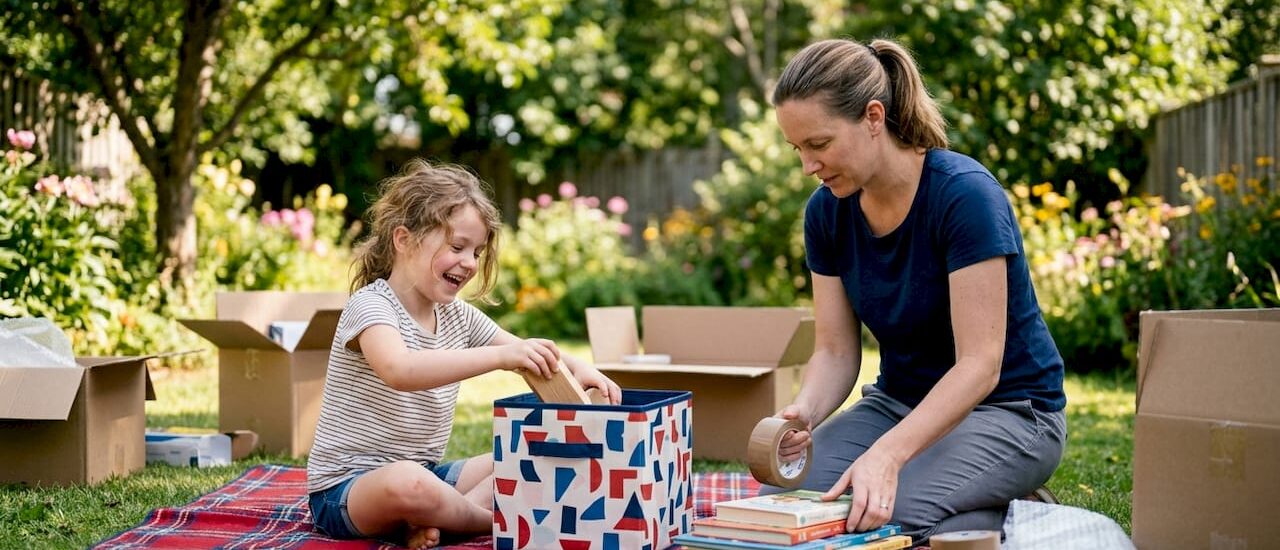
Children should be active participants in a family relocation, not bystanders. The Australian Psychological Society recommends involving kids at an age-appropriate level so they gain a sense of agency, which directly reduces anxiety. The Raising Children Network echoes this with practical steps: small packing jobs, choice-based decisions, and scheduled goodbyes. Longitudinal research from Charles Darwin University found that moving twice or more before age 2 is linked to higher internalising behaviour scores at age 9, which underscores why the timing and manner of involving children genuinely matters.
Here is what that looks like in practice:
Pro Tip: Give every child one decision that is genuinely theirs, whether that is the colour of their new bedroom wall or where their toy box goes. Small choices build real confidence.
Age shapes everything about how children can contribute to a move. Matching tasks to developmental stage keeps kids engaged without creating stress.
Toddlers cannot help pack, but they are acutely sensitive to disruption. Keep mealtimes, nap times, and bedtime rituals identical right through the move. Bring a familiar comfort item, a blanket or soft toy, in the car rather than the removalist truck. Adults handle everything else.
Children in this group can pack a small box of their own toys, stick on a label, and choose which stuffed animal rides with them on moving day. A simple farewell ritual, a card for a neighbour or a small party for friends, helps them process the change rather than just absorb it. Involving children in small, concrete tasks like packing a personal box measurably improves their sense of control.
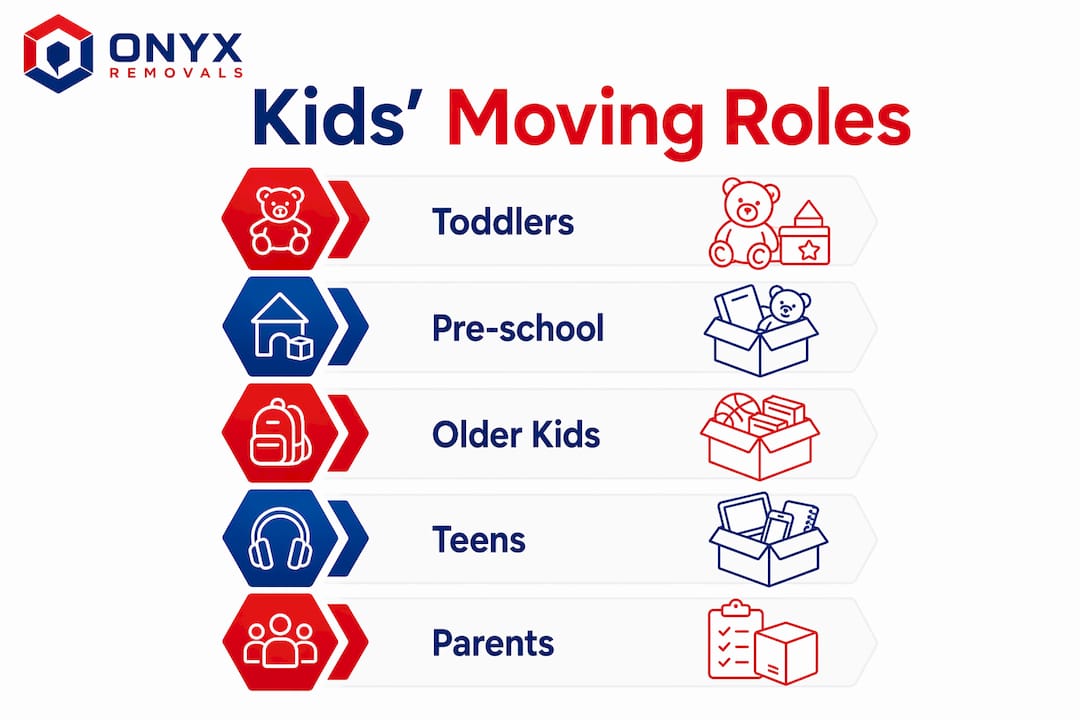
This age group can take on a personalised checklist: sorting clothes to donate, researching parks or sports clubs near the new address, and helping label boxes by room. Give them a real job with a visible outcome.
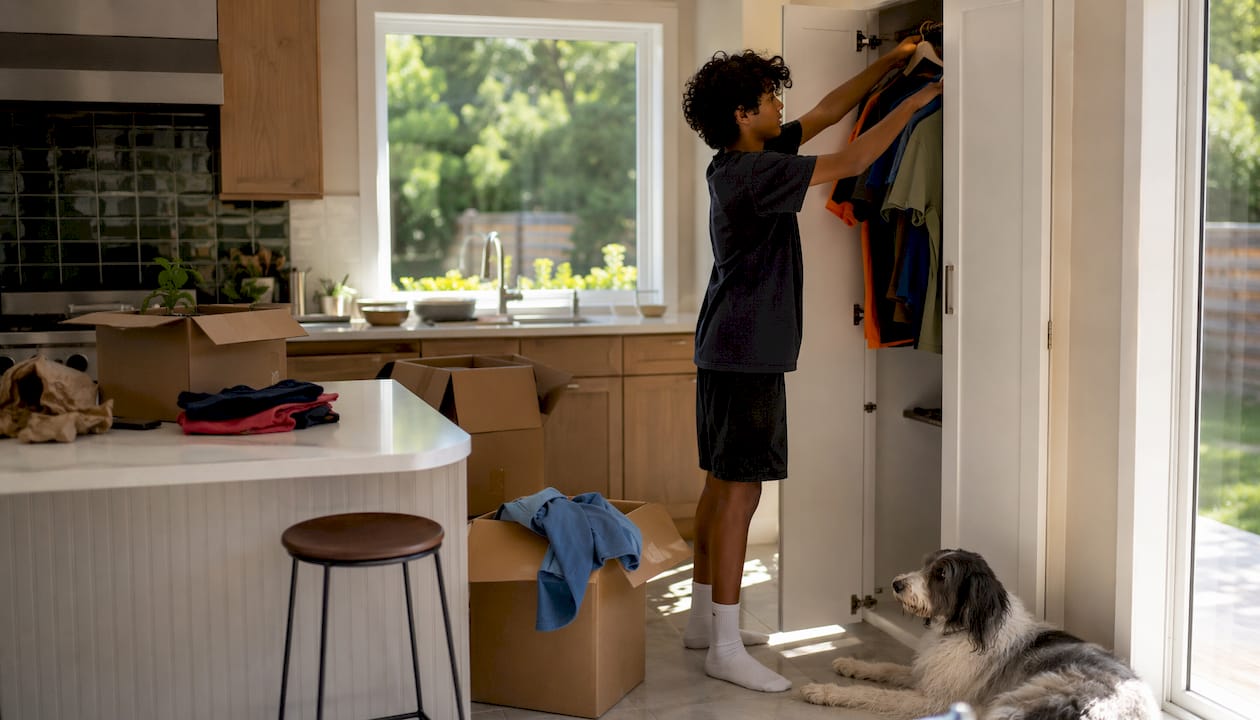
Teenagers benefit most from genuine input. Let them weigh in on school options where that is realistic, choose how their room is set up, and manage their own social connections through the transition. They should pack their own belongings entirely. What they do not need is to feel responsible for adult stress.
Pro Tip: Safety-critical tasks, school enrolment, lease agreements, and heavy furniture always stay adult-led. Involvement means contribution, not responsibility.
Research note: A longitudinal analysis using the Achenbach Child Behaviour Checklist found measurable links between early-life moves and later behavioural difficulties. Planned moves in stable families, however, carry far less risk than moves driven by family instability.
The Australian Psychological Society is clear: model calm, name feelings, and create space for children to express sadness rather than rushing to fix it. That last part is harder than it sounds.
Many parents instinctively respond to a child’s distress with reassurance: “You’ll love it there!” That impulse closes down emotional processing. Clinical guidance recommends naming the feeling first: “It sounds like you’re really going to miss your friends. That makes sense.” Then schedule a follow-up conversation rather than expecting resolution on the spot.
Practical routines matter as much as the right words:
When a move is planned and the family is stable, research suggests outcomes are often neutral or even positive for school performance. The negative effects documented in longitudinal studies tend to track family instability, not the move itself. That context matters when you are talking honestly with your kids about why you are moving.
A clear schedule prevents last-minute chaos and keeps kids engaged at the right moments. The Melbourne family moving checklist from Onyx Removals maps this out in detail; here is the family-specific layer.
| Milestone | Adult tasks | Child tasks (age-matched) |
|---|---|---|
| 8+ weeks out | Book removalist, notify schools, research catchment areas | Tell children about the move; answer questions honestly |
| 4 weeks out | Arrange storage if needed, confirm school enrolment | Ages 9+: start sorting toys and clothes; teens: visit new school |
| 2 weeks out | Confirm moving slot, pack non-essentials | Ages 4+: pack “my box”; plan farewell event |
| Moving week | Supervise removalists, manage documents | Prepare activity bag; say goodbyes |
| Post-move weeks | Unpack, connect utilities, register with GP | Explore new neighbourhood; start new extracurriculars |
Family checklist:
School transition is where children’s feelings about moving become most concrete. The Raising Children Network recommends visiting the new school before the first day, asking about buddy programmes, and keeping contact with old classmates. These are low-cost steps with a high return on settling time.
For social continuity, plan structured goodbyes rather than letting friendships fade. Joining one extracurricular activity in the new area within the first fortnight gives children a ready-made social context.
Pro Tip: Ask the new school directly about ESL support, learning assistance, or any Defence School Mentor programme if your family has specific needs. Schools have more support infrastructure than most parents realise.
For employer-assisted relocations, HR coordinators should confirm school start dates and local catchment boundaries early. A child who misses the first week of term starts at a social disadvantage that takes months to recover.
Safe tasks build confidence. Hazardous ones create accidents and anxiety.
Safe tasks by age:
Safety rules to enforce on moving day:
Designate a child-safe zone, a cleared room or outdoor area, where kids can wait with their activity bag while the heavy work happens. If the move is complex or the property is large, arranging a nanny or carer for the day keeps children safe and out of the way without making them feel excluded.
Checklist for a babysitter or grandparent on moving day: emergency contacts, child’s routine, snack preferences, location of comfort items, and a simple schedule of when the family will be accessible.
Small, consistent routines reduce moving stress more reliably than big gestures. A child who eats dinner at the same time and goes to bed with the same ritual in the new house feels far more settled than one who gets a special treat but loses their normal schedule.
Pro Tip: Spend one-on-one time with each child every day during the transition week. Ten minutes of undivided attention does more than an hour of distracted reassurance.
Onyx Removals’ timed packing and unpacking slots, combined with storage solutions for families, mean you do not have to live in boxes while trying to maintain a normal routine. Unpacking the child’s room first is standard practice for family-focused moves.
Seek help if difficulties persist beyond four to six weeks or begin interfering with school attendance, sleep, appetite, or friendships. Normal adjustment looks like temporary sadness and some clinginess. Concerning signs look different.
Warning signs to watch for:
Practical next steps:
The Australian Institute of Family Studies publishes evidence-based research on housing, mobility, and child outcomes, and is a useful reference for families or HR coordinators wanting policy-level context.
Age-appropriate involvement, combined with adult responsibility for logistics and safety, produces better outcomes for children in a family relocation than either excluding them or overloading them with adult concerns.
| Point | Details |
|---|---|
| Involve kids by age | Match tasks to developmental stage: comfort items for toddlers, packing boxes for primary-schoolers, real choices for teens. |
| Model calm, name feelings | Validate emotions before reassuring; resist the urge to fix sadness on the spot. |
| Protect routines | Keep sleep, meals, and extracurriculars consistent; unpack the child’s room first. |
| Act early on school transition | Notify schools early, arrange orientation visits, and ask about buddy programmes before the first day. |
| Onyx Removals | Onyx Removals offers family-friendly timed slots, child-safe staging, and storage options that protect children’s routines through the move. |
The most common source of stress on a family moving day is not the heavy furniture. It is unclear roles. When children do not know what they are supposed to be doing, they either get underfoot or feel sidelined, and both outcomes add friction to an already demanding day.
From Onyx Removals’ experience with Melbourne families, the moves that go smoothest are the ones where children have been briefed in advance: they know their job, they know where to wait, and they know when they will see their new room. Setting up a child-safe staging area, a cleared space with the activity bag and a snack, takes five minutes and prevents a dozen interruptions.
Unpacking the child’s room first is not just a nice gesture. It gives children a settled space to retreat to while the rest of the house is still in boxes, which means parents can keep working without managing distress at the same time. Labelling the “first-night box” clearly so it comes off the truck last but gets opened first is a small logistical detail that makes a real difference to how the first evening feels.
Dinshaw’s practical guide for families covers these operational details in full, including how to brief children before moving day and what to hand off to the removalist team.
Pro Tip: Schedule the child’s room unpack as the first job, not an afterthought. A settled child means a parent who can focus on the rest of the house.
Moving with children does not have to mean choosing between a smooth move and a settled family. Onyx Removals offers residential moving services built around family needs: timed morning and afternoon slots that protect sleep routines, child-safe staging areas on moving day, and professional packing and unpacking so parents are not still surrounded by boxes at bedtime.
The team handles heavy lifting, fragile items, and specialty moves so your energy goes to the kids, not the logistics. Storage options mean you can move at a pace that suits your family rather than unpacking everything in one chaotic day. For employer-assisted relocations, Onyx Removals works directly with HR coordinators to align moving dates with school start terms.
Get a family-friendly quote and tell the team your children’s ages when you book. That single detail shapes how the whole day is planned.
Key resources cited in this article, with a note on what each offers:
| Source | Type | Best for |
|---|---|---|
| Raising Children Network | Practical parenting | School transitions, age-based tasks |
| Australian Psychological Society | Clinical guidance | Emotional strategies, parenting scripts |
| headspace | Support service | Teens aged 12–25 showing distress |
| Beyond Blue | Support service | Family mental health during change |
| Australian Institute of Family Studies | Research and policy | Housing mobility and child outcomes |
| ABC News (2025) | Journalism | Accessible expert advice and examples |

No Related Post


