



TL;DR:
- Proper assessment and specialized packing significantly reduce damage risks for fragile collectibles during moves.
- Using the right materials and techniques, including climate control and custom crates, is essential for high-value items.
- Professional packing and careful preparation lower damage rates and improve insurance claims compared to DIY methods.
Opening a moving box to find a beloved ceramic figurine shattered into pieces, or discovering your vintage coin collection has been crushed by shifting weight, is genuinely heartbreaking. The emotional and financial loss from damaged collectibles can be significant, and the cruel irony is that most of it is entirely preventable. Improper packing is the leading cause of damage claims during moves, yet professional packing prevents around 85% of these incidents. This guide walks Melbourne collectors through everything they need to know about assessing, packing, and safely transporting their most treasured pieces.
| Point | Details |
|---|---|
| Specialist packing matters | Professional packing reduces damage risk and is crucial for valuable Melbourne collectibles. |
| Choose the right materials | Use industry-recommended materials and techniques—standard boxes won’t cut it for fragile goods. |
| Final checks are vital | Document, insure, and carefully inspect packed items before move day to minimise risks. |
| DIY has limits | DIY works for low-value items, but rare pieces are safest in expert hands. |
Before you wrap a single item, you need an honest picture of what you own and what each piece actually needs. Not all collectibles carry the same risk during a move. A robust bronze sculpture behaves very differently in transit than a hand-painted porcelain vase or a first-edition book.
Start by creating a written inventory of your collection, grouping items by type, approximate value, and vulnerability. This process forces you to confront which pieces would be truly irreplaceable if lost. Items worth hundreds or thousands of dollars, or those with deep sentimental significance, deserve a completely different level of care than everyday decorative objects.
Some collectibles present specific red flags that signal the need for specialist handling:
For lower-value items with robust construction, careful packing fragile items tips and proper materials can make DIY a reasonable option. However, specialist packing is essential for irreplaceable collectibles, as amateur attempts often underestimate moisture, vibration, and flex damage over a long journey. The savings from doing it yourself quickly evaporate when a rare piece is damaged.
Pro Tip: Write a separate list of every item you consider truly irreplaceable, whether for sentimental or monetary reasons, and consult a specialist packing service before move day. Early consultation gives experts time to source custom crating materials and plan properly.
Understanding whether professional packing vs DIY is right for your situation is one of the most important decisions a collector can make.
| Collectible type | Risk level | Recommended approach |
|---|---|---|
| Ceramic and porcelain figurines | High | Professional specialist packing |
| Vintage coins and medallions | Medium to high | Specialist packing with climate control |
| Framed artwork and prints | High | Custom crating by professionals |
| Books and paper ephemera | Medium | Archival boxes, climate-controlled transport |
| Robust bronze or stone sculptures | Medium | Professional wrapping, padded crating |
| Glass collectibles and crystal | Very high | Professional specialist packing |
Once you have assessed your collection, gather the right materials before you touch a single item. Using the wrong packing supplies is one of the most common and costly mistakes collectors make.
Here is what the right packing toolkit looks like for different collectible types:
| Material or tool | Best used for | Why it matters |
|---|---|---|
| Acid-free tissue paper | Paper ephemera, art prints, textiles | Prevents chemical degradation over time |
| Polyethylene foam rolls | Ceramics, glass, figurines | Absorbs shock without transferring chemicals |
| Custom timber crates | Sculptures, large framed artwork | Rigid protection against crush and flex |
| Desiccant sachets | Coins, wooden items, books | Controls moisture inside sealed boxes |
| Bubble wrap (large cell) | Glass collectibles, crystal | Cushions vibration impact |
| Acid-free cardboard dividers | Coin collections, small ceramics | Prevents contact between individual pieces |
| Packing peanuts (anti-static) | Electronics collectibles, sensitive metals | Prevents static discharge |
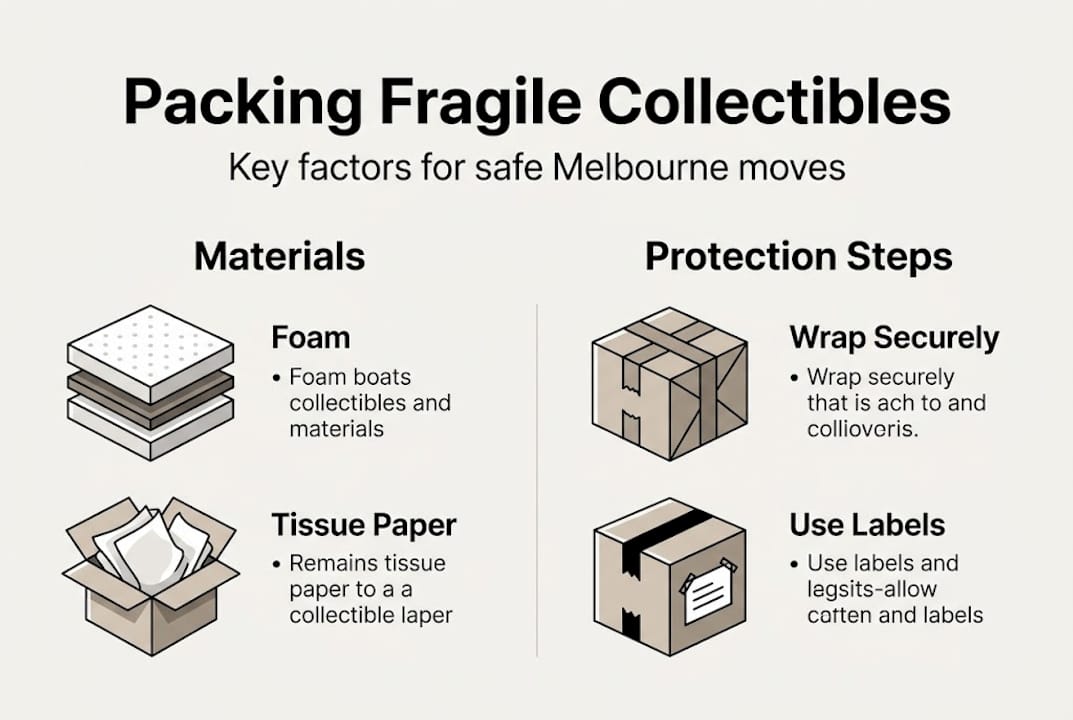
A few materials deserve special mention. Foam is far superior to crumpled paper for absorbing vibration because it maintains consistent density across the journey. Custom crates are worth every dollar for large or oddly shaped pieces, as they eliminate the movement that causes fractures.
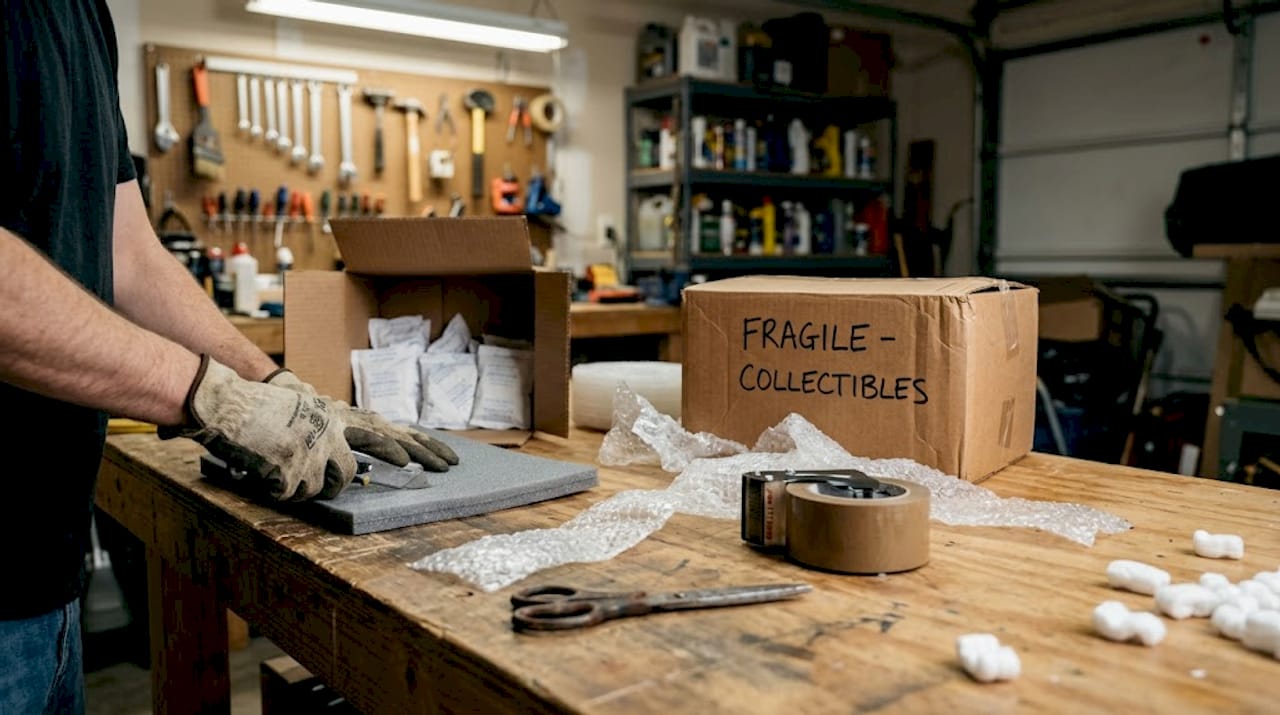
Desiccants are often overlooked but critically important. Temperature-sensitive finishes on coins, wood and paper items, and glass panels are all vulnerable to humidity fluctuations during Melbourne’s changeable autumn and spring weather. Sealing a desiccant sachet inside each box provides a low-cost insurance policy against moisture damage.
Pro Tip: Never wrap antiques or vintage items in newspaper. The ink transfers onto surfaces over time and can permanently stain pale ceramics, stone, or aged papers. Always use acid-free tissue or unprinted packing paper as the first layer in contact with your item.
For specialist packing materials specific to your collection type, sourcing from a professional removalist ensures the supplies meet archival and transit standards. You can also ask about the specialty item protection guide for more detail on materials for unusual pieces.
Do not underestimate the importance of strong outer boxes. Double-walled cardboard boxes rated for heavier loads are essential. Single-walled boxes flex and compress under stacking weight, which transfers directly to the contents no matter how well-wrapped they are.
With your materials ready, follow this sequence carefully. Rushing any step is where damage begins.
Caution: Avoid over-tightening wrapping around fragile items, as too much compression can cause surface cracking on ceramics or glass. Equally, never leave voids inside a packed box; empty space is what allows items to shift and collide.
Following safe packing instructions precisely is what separates a successful move from a devastating one. Professional packing prevents 85% of damage incidents because trained packers apply these techniques consistently under pressure, without cutting corners on the last few boxes. For high-value pieces, the fragile item transport guide provides additional loading and securing strategies.
Packing the boxes is only part of the job. Final checks before the truck arrives can catch problems that would otherwise only surface when you unpack at the other end.
Work through these verification steps methodically:
Documentation is equally critical before move day:
The comparison below illustrates why these steps matter:
| Metric | Professional packing | DIY packing |
|---|---|---|
| Estimated damage rate | Below 1% of moves | Significantly higher risk |
| Use of appropriate materials | Consistent | Variable |
| Documentation support | Often included | Self-managed |
| Insurance alignment | Typically confirmed | Often overlooked |
Professionals claim a damage rate below 1%, while DIY risks increase when collectors rush, use inappropriate materials, or skip documentation. Reviewing what not to pack can also save you from costly errors. For specialised pieces, artwork moving checks follow a similar verification process. Knowing what not to pack in standard boxes is equally important for protecting your most sensitive pieces.
Most packing guides stop at materials and technique. But after working with Melbourne collectors across hundreds of moves, we have seen a pattern that step-by-step instructions alone cannot address.
The biggest hidden risk is not dramatic breakage. It is subtle, slow damage that reveals itself months later. A ceramic glaze that begins to craze, a coin surface that develops micro-corrosion, a vintage print that warps slightly. These are symptoms of humidity exposure during the move, not rough handling. Climate control and desiccants are not optional extras for serious collectors. They are fundamental.
Conventional wisdom also overstates the cost savings of DIY packing. When you factor in proper archival materials, custom boxes, and the genuine risk of loss, the true cost difference between DIY and stress-free pro packing is far smaller than most people expect. A single damaged collectible worth a few hundred dollars eliminates any savings immediately.
Finally, documentation and insurance planning are treated as afterthoughts in most guides. In our experience, collectors who photograph their items before a move and confirm their transit cover are the ones who recover quickly if something does go wrong. The packing technique matters enormously, but preparation and planning around the move are what truly protect your collection.
Knowing the right techniques is a strong start, but applying them consistently under the pressure of a real move is a different challenge entirely.

At Onyx Removals, our team specialises in packing and transporting fragile collections with the precision and care they deserve. From custom crating for sculptures to climate-aware handling for paper and coin collections, we provide pro packing Melbourne solutions tailored to your specific needs. Whether you are moving across Melbourne or across the city, our residential removal service includes specialist support for every category of collectible. Get in touch today for a personalised quote and let our experienced team protect what matters most to you.
Use acid-free wrapping, foam padding, and appropriately sized double-walled boxes, or engage a specialist packer for irreplaceable collectibles where moisture, vibration, and flex damage are serious risks.
Professional packing is strongly recommended for high-value or irreplaceable items, since improper packing causes the majority of damage claims, while careful DIY can be sufficient for more robust, lower-value pieces.
Photograph every item before packing, consult your home insurer about transit cover, and confirm your removalist’s policy covers valuables, as professionals maintain below 1% damage rates but documentation is still essential for any claim.
Using newspaper, leaving internal voids in boxes, and skipping humidity control are the most frequent errors, and improper packing remains the leading cause of avoidable damage claims during Melbourne moves.

No Related Post


