



TL;DR:
- Proper packing materials and techniques significantly reduce damage risks for valuables during moving.
- Hiring professional movers with experience and insurance lowers the likelihood of damage and loss.
- Carry irreplaceable items personally and document valuables thoroughly before the move.
Moving house in Melbourne is stressful enough without the nagging fear that your grandmother’s china, your signed artwork, or your brand-new laptop might not survive the journey. That anxiety is completely valid. Without the right approach, valuables face real risks including breakage, theft, and environmental damage. The good news is that professional techniques prevent up to 85% of typical moving damage claims. This guide walks you through every stage of a safe valuables move, from initial preparation through to final checks, so you can relocate with genuine confidence.
| Point | Details |
|---|---|
| Use the right materials | Professional-grade packing supplies offer vastly better protection for your valuables than everyday materials. |
| Document and insure | Taking photos and securing full-value transit insurance gives extra security for your most valuable items. |
| DIY isn’t safest for all items | Professional movers significantly reduce the risk of damage, especially for large or tricky-to-move valuables. |
| Plan for Melbourne’s challenges | Account for local factors like stairs, parking, and narrow city streets when moving valuables. |
Not everything in your home qualifies as a “valuable” in the moving sense, but the category is broader than most people realise. Valuables include jewellery, artwork, antiques, collectibles, high-end electronics, sensitive documents, and family heirlooms. These items share one thing in common: they are either difficult or impossible to replace if something goes wrong.
The main risks during a Melbourne move fall into four categories:
Melbourne also presents some logistical challenges that amplify these risks. Narrow inner-city streets in suburbs like Fitzroy or Richmond can make truck access difficult. Many older homes have steep staircases, tight doorways, and no lift access. These factors increase the chance of accidental drops or rushed handling. Checking property access at both ends of your move before moving day is essential.
A useful starting point is reviewing Melbourne home security tips to understand how to protect items during the transition period when your old and new homes may both be partially unsecured.
Here is a quick comparison of preparation levels and their outcomes:
| Preparation level | Typical outcome |
|---|---|
| No inventory or photos | Hard to make insurance claims |
| Basic inventory only | Partial protection |
| Full photo inventory + insurance | Strong claim evidence and peace of mind |
As DIY handling risks show, improper materials and inexperienced handling are the leading causes of damage to valuables. Professionals bring the right equipment and experience to avoid these pitfalls. When choosing the right removalist, look specifically for experience with specialty and high-value items.
Pro Tip: Before you pack a single box, photograph every valuable item individually. Capture serial numbers, unique markings, and any existing damage. Store these photos in cloud storage so they are accessible from anywhere if you need to make an insurance claim.
Once you understand what is at risk and why, the next step is assembling the right supplies. The materials you use make an enormous difference. Standard household items like newspaper or thin cardboard simply do not offer adequate protection for high-value possessions.
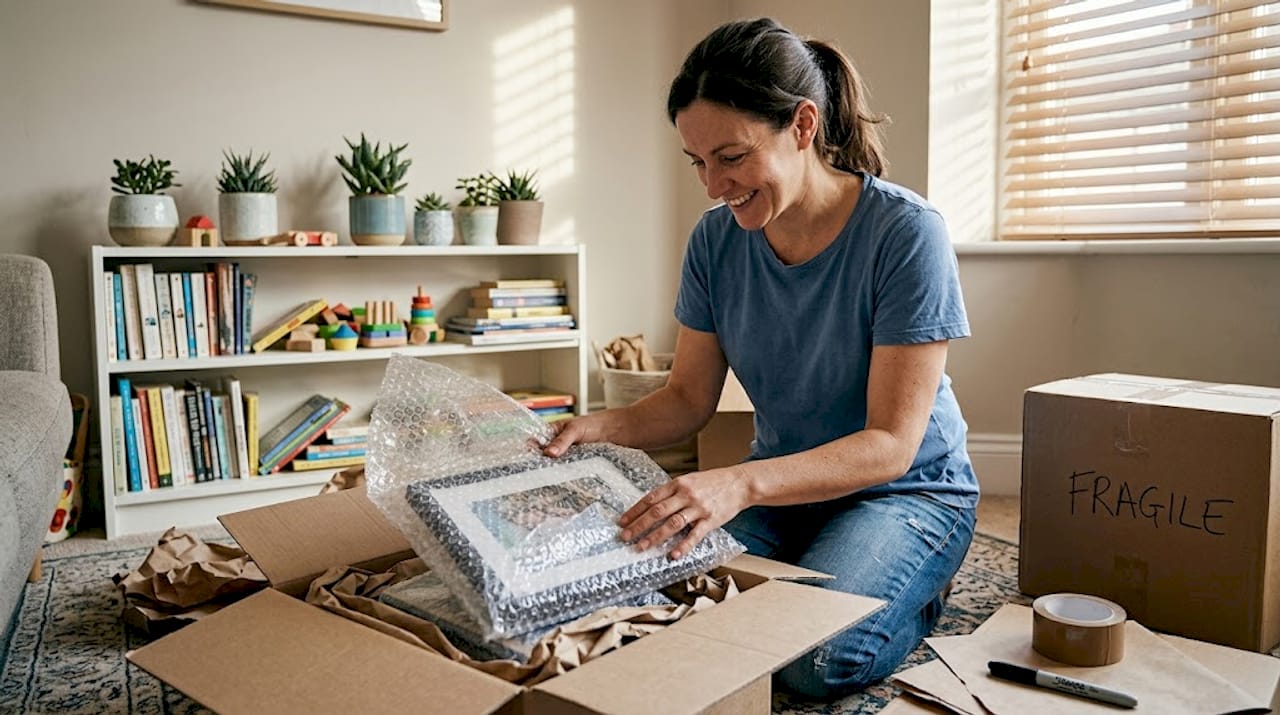
Here is how everyday materials compare to professional-grade alternatives:
| Item | Everyday option | Professional-grade option |
|---|---|---|
| Wrapping material | Newspaper | Acid-free tissue paper |
| Box type | Supermarket box | Double-walled cardboard box |
| Cushioning | Old towels | Bubble wrap and packing peanuts |
| Crating | None | Custom timber crates |
| Sealing | Masking tape | Heavy-duty packing tape |
The difference is not just cosmetic. Newspaper ink can transfer onto delicate surfaces and cause permanent staining. Thin single-walled boxes collapse under pressure. Custom crates, by contrast, are built to the exact dimensions of the item inside, eliminating movement during transit entirely.
Your essential toolkit should include:
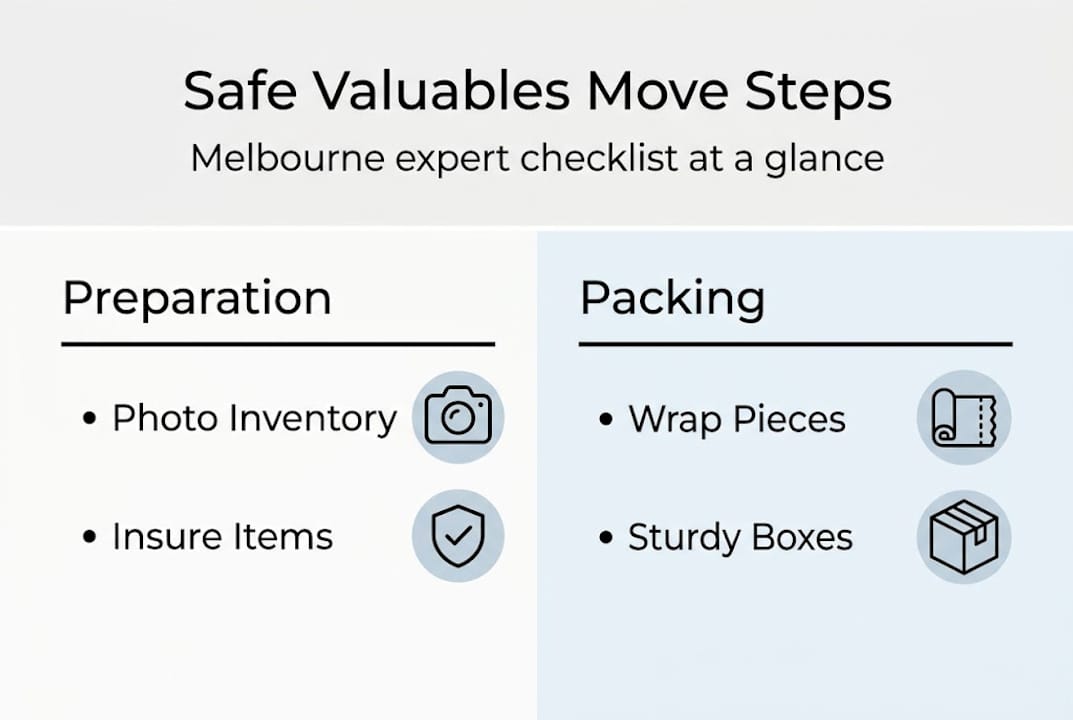
As specialised packing guidance confirms, each item should be wrapped individually, all internal voids filled, and every fragile box labelled clearly with directional arrows. This is not overcaution. It is the baseline for protecting anything irreplaceable.
For detailed technique, the guides on packing fragile items and fragile item packing tips cover specific methods for glassware, ceramics, and other delicate objects.
Pro Tip: Never use newspaper to wrap valuables. The ink transfers easily onto porous surfaces like unglazed ceramics, timber frames, and fabric, leaving stains that are often impossible to remove.
Different valuables demand different approaches. A one-size-fits-all method is one of the most common and costly mistakes Melbourne movers make.
Two mistakes to avoid at all costs: overpacking small boxes so they become too heavy to lift safely, and leaving empty voids inside boxes that allow items to shift and collide during transit.
Warning: Attempting to move high-value antiques, pianos, or large artworks without professional help significantly increases the risk of irreversible damage. The cost of a specialist removalist is almost always less than the cost of repair or replacement.
For a full breakdown of specialty item handling, the specialty item removals guide covers pianos, safes, and oversized antiques in detail. If you have not yet created a record of your possessions, preparing a valuables inventory before moving day is a step you will not regret.
Pro Tip: Always carry irreplaceable jewellery, passports, and critical documents in a bag that stays with you personally throughout the move. No truck, no matter how reputable the company, is as secure as your own hands.
Packing well is only half the equation. The other half is deciding who handles the transport. For many Melbourne households, this is where the real risk lies.
Professional movers prevent 85% of damage claims compared to a greater than 20% damage rate for DIY moves. Put simply, one in five people who move their own valuables experience damage. Those are not comfortable odds when you are talking about a piece of art worth thousands of dollars.
Here is a direct comparison:
| Factor | DIY move | Professional move |
|---|---|---|
| Equipment quality | Basic | Specialist-grade |
| Insurance coverage | Usually none | Transit insurance available |
| Damage risk | High | Significantly lower |
| Melbourne access knowledge | Limited | Experienced with local conditions |
| Handling of specialty items | Risky | Trained and equipped |
For valuables, the case for professionals is strong. Key advantages include:
Insurance is non-negotiable for high-value items. Basic released-value coverage, which is the default for many moves, pays only a fraction of an item’s actual worth. Full-value protection ensures you are properly covered. Declare high-value items to your insurer in advance and back every declaration with photos and receipts.
For a thorough look at the tradeoffs, the DIY vs professional moving comparison is worth reading before you commit to either approach. If you want professionals to handle the packing as well, removalist packing options explain exactly what that service covers.
Here is an honest perspective from years of experience with Melbourne relocations: the people who have the worst outcomes are not always the ones who went fully DIY. Sometimes it is the people who hired professionals but then handed over every single item without thinking critically about what truly could not be replaced.
The smartest approach is a split strategy. Carry anything irreplaceable, small, and personally significant yourself. That means jewellery, passports, hard drives with family photos, and sentimental heirlooms that have no monetary value but enormous personal meaning. For everything else, particularly large, heavy, or fragile specialty items, engage professionals who bring the right tools and insurance.
DIY can work for low-value, durable items. But the statistics are clear: the risk climbs sharply when valuables are involved. Professional packing insights show that the gap between DIY and professional outcomes widens considerably for specialty items. Caution and expertise together are far more powerful than either alone.
You now have a solid framework for protecting your most important possessions during a Melbourne move. Knowing the right methods is the first step. Having the right team behind you is the second.
Onyx Removals provides Melbourne residential moving services trusted by homeowners and renters across the city, including specialist handling for high-value and fragile items. Whether you need full-service packing or just reliable transport for your most precious possessions, our team brings the experience and equipment Melbourne moves demand. Explore our specialty removals guidance or find out more about professional packing help to take the next step with confidence.
For small or irreplaceable items like jewellery and documents, carry them yourself. For large, heavy, or fragile valuables, professionals offer superior safety and access to proper insurance coverage.
Acid-free tissue paper, bubble wrap, double-walled boxes, and custom crates provide the best protection. Specialised packing materials eliminate internal movement and reduce the risk of surface damage significantly.
Yes, absolutely. Comprehensive transit insurance covering full replacement value is essential, especially for high-value items. Basic coverage rarely reflects the true worth of what you own.
Photograph each item, record serial numbers and any existing damage, and list estimated values. Keep copies in cloud storage and provide a copy to your insurer, as documented photo inventories are critical for successful claims.

No Related Post


