



TL;DR:
- Melbourne moves require permits, lift bookings, and timely address updates due to city-specific logistics.
- Preparation and early planning are crucial for cost control, permits, and avoiding delays in residential and office moves.
- Specialist moves for plants, fragile items, and equipment need tailored strategies to ensure safety and compliance.
Most people assume moving is moving. Box it up, load the truck, unpack at the other end. But that assumption catches Melburnians off guard every single time. A home relocation, an office shift, and a specialist transport job each carry completely different risks, timelines, and legal requirements. Get one step wrong and you’re looking at fines, damaged goods, or days of unplanned downtime. This guide breaks down exactly what each type of move demands in Melbourne, so you can plan with precision rather than optimism.
| Point | Details |
|---|---|
| Not all moves are equal | Residential, commercial and specialty moves require different strategies and planning. |
| Plan ahead for compliance | Permits and address changes are unique to Melbourne and must be handled promptly. |
| Avoid underestimating costs | Both homes and businesses often overlook true relocation expenses by up to 30%. |
| Specialist items need expertise | Fragile items and plants require professional handling to prevent loss and extra costs. |
Melbourne is a city that rewards preparation. The combination of dense inner suburbs, heritage buildings with narrow staircases, and one of Australia’s most congested road networks makes even a simple home move more involved than it might be elsewhere. Add in council permit requirements and strict building management rules, and you’ve got a city where the logistics can genuinely make or break your moving day.
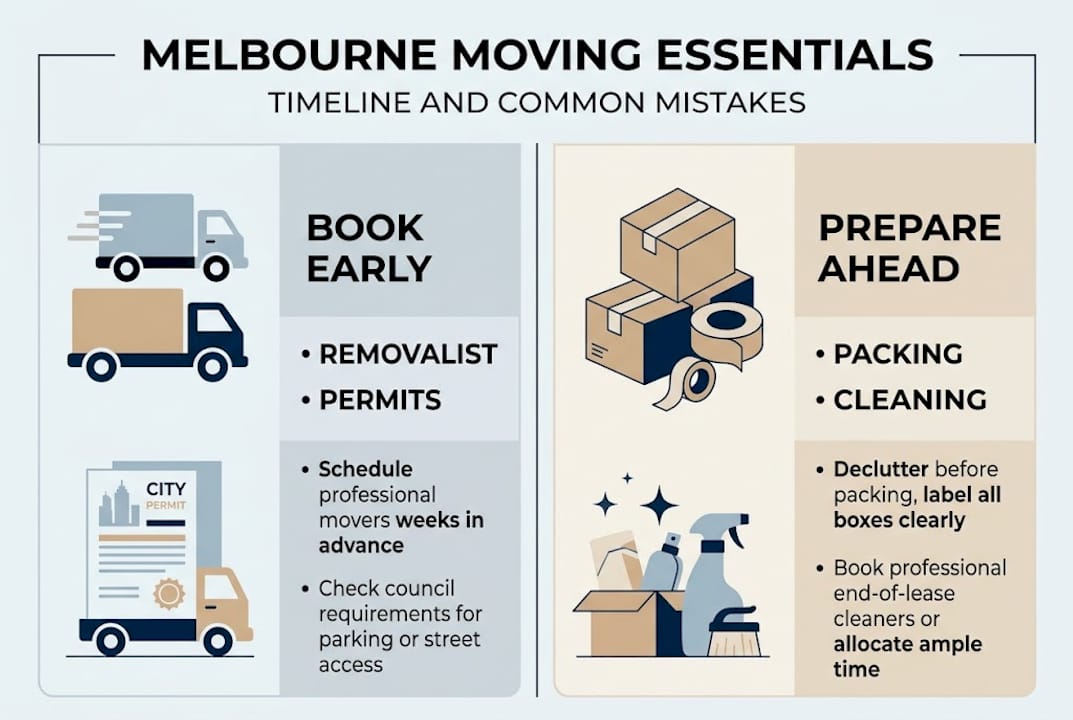
One of the most common surprises for first-time movers here is the permit situation. If you’re moving into or out of an apartment, you’ll almost certainly need to book the lift in advance and may need council approval for a parking bay outside the building. These aren’t optional extras. Skip them and you risk fines or being turned away on the day.
Address updates are equally non-negotiable. VicRoads address updates must be completed within 14 days of moving, which catches a surprising number of people out. The clock starts the moment you take possession of your new address, not when you feel settled.
Here are the core Melbourne moving realities every mover faces:
“A smooth Melbourne move doesn’t happen on the day. It’s the result of decisions made weeks before the truck arrives.”
Cost is another area where assumptions fail people. Many first-timers underestimate how quickly professional fees, packing materials, permits, and storage add up. Understanding affordable moving options early helps you budget realistically. It also helps to understand the DIY vs professional moves tradeoff before committing either way. The broader picture of Melbourne’s moving industry shows that full-service removalists handle the majority of residential and commercial work for good reason.
Home moves in Melbourne follow a rhythm. Rush that rhythm and everything gets harder. The 6-8 weeks planning window isn’t arbitrary. It accounts for permit processing times, removalist availability (especially in peak periods like December and January), and the sheer volume of tasks involved.
Here’s a practical timeline that works for most Melbourne home moves:
Packing method matters more than most people expect. Double-walled boxes hold up under weight and stacking, which standard supermarket boxes simply don’t. Fragile items need individual wrapping in bubble wrap or packing paper, not just stuffed into a box with other things. Clear labelling by room means unpackers know exactly where each box goes without opening it.
If you’re renting in Melbourne, factor in condition reports and cleaning obligations at both your old and new property. These often add time and cost that people forget to account for.
| Task | Timeframe | Common mistake |
|---|---|---|
| Book removalist | 6-8 weeks out | Leaving it too late in peak season |
| Apply for permits | 4-6 weeks out | Assuming permits aren’t needed |
| Pack fragiles | 3-4 weeks out | Using inadequate materials |
| Update VicRoads | Within 14 days after | Forgetting entirely |
Understanding moving costs in Melbourne early in the process prevents nasty surprises. When choosing home removalists, prioritise those with experience in your specific building type.
Pro Tip: Pack a “moving day kit” the night before: phone charger, snacks, important documents, a basic toolkit, and a change of clothes. Keep it in your car, not the truck. You’ll thank yourself by mid-afternoon.
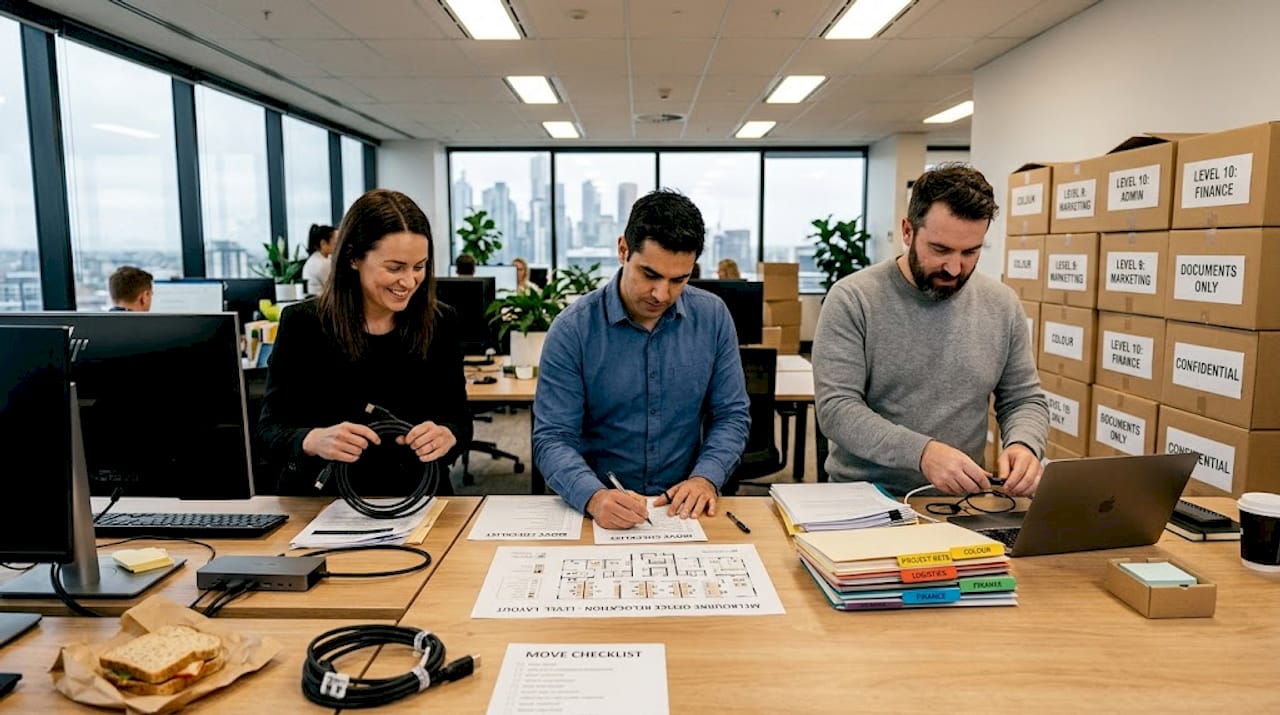
Office moves operate on a completely different scale of complexity. Where a home move is personal, a business relocation affects revenue, staff productivity, client communications, and IT infrastructure all at once. The stakes are higher, and the margin for error is smaller.
Timelines scale with headcount and complexity:
| Office size | Staff count | Recommended timeline |
|---|---|---|
| Small | Fewer than 20 | 6-8 weeks |
| Medium | 20-100 | 8-12 weeks |
| Large | More than 100 | 12-16 weeks |
These aren’t conservative estimates. They reflect real-world office relocation timelines that account for IT migration, contractor scheduling, and staff coordination. Trying to compress them typically creates the exact downtime businesses are trying to avoid.
Here’s how to structure a successful office move:
Key statistic: Businesses underestimate office move costs by 20-30% on average. IT migration, after-hours rates, and specialist handling are the most commonly missed line items.
Don’t overlook the physical environment of your new space. Electrical capacity, internet infrastructure, and even natural light affect productivity and staff satisfaction. These are worth assessing before signing a lease, not after. For businesses with greenery in their offices, office plant relocation deserves its own sub-plan within the broader move.
Not everything fits neatly into a box. Some of the most stressful moving moments happen when people realise too late that their grand piano, original artwork, or beloved fiddle-leaf fig needs more than a standard removalist service.
Plants are a particularly misunderstood category. Moving a large office plant isn’t just a matter of lifting it into a van. It involves pest checks and moisture protection to prevent infestations from spreading, avoiding heat stress during transport, and using the right equipment to avoid root and structural damage. Melbourne summers make the heat issue especially critical.
Here’s what specialist plant and fragile item moves typically involve:
Pro Tip: A mature indoor plant can cost several hundred dollars to replace. Professional plant moving is almost always cheaper than buying new, and it’s significantly better for sustainability. Don’t abandon a thriving collection just because it seems hard to move.
Other specialist items worth planning for include wine collections, medical equipment, laboratory materials, and retail fixtures. Each has handling requirements that a generalist removalist may not be equipped to meet. Always ask specifically about experience with your item type before booking.
Here’s something the conventional moving advice rarely says plainly: planning is necessary, but it’s not sufficient. You can have a detailed checklist and still have a disastrous move if one part of the chain fails. In Melbourne’s market specifically, the variables are numerous enough that a single oversight cascades quickly.
We’ve seen it happen with IT migrations that weren’t tested before the move, causing businesses two or three days of operational paralysis. We’ve seen plants arrive stressed and dying because no one accounted for a December heatwave. We’ve seen home moves stall because a lift booking fell through and the removalists couldn’t access the building.
Full-service moves represent 64% of industry revenue, and the reason is simple: people who’ve experienced a complicated move firsthand usually don’t want to manage every variable themselves the next time.
The truth is, “near enough” doesn’t work in high-stakes relocations. Precision and adaptability matter more than enthusiasm. Identifying your weakest link early, whether that’s your packing method, your IT plan, or your plant handling, and getting expert support for it specifically, is what separates a smooth move from an expensive lesson. Flexible moving services exist precisely because no two moves are identical.
If you’d rather avoid common pitfalls altogether, here’s how to access expert support tailored for your move.
Onyx Removals has dedicated teams for residential removals, commercial relocations, and specialist transport needs across Melbourne. Whether you’re shifting a family home, downsizing an office, or moving a collection of mature plants, we match your situation with the right equipment, experience, and planning support. Every job gets a tailored quote that accounts for your specific building type, access requirements, and item categories, so nothing gets missed. Explore the plant relocation guide or get in touch directly to start planning your move with a team that’s done it all before.
Aim to book at least 6-8 weeks ahead to secure your preferred removalist, apply for any required permits, and allow time for packing and legal address updates.
Businesses underestimate office move costs by 20-30% on average, with IT migration fees, after-hours moving rates, and specialist item handling being the most frequently missed expenses.
For large or mature plants, professional removalists use specialist equipment and know how to manage pest, heat, and moisture risks, making it far less costly than replacing established plants.
You must arrange parking permits from your local council, book lift access through your building manager, and update your address with VicRoads within 14 days of your move date.

No Related Post


